


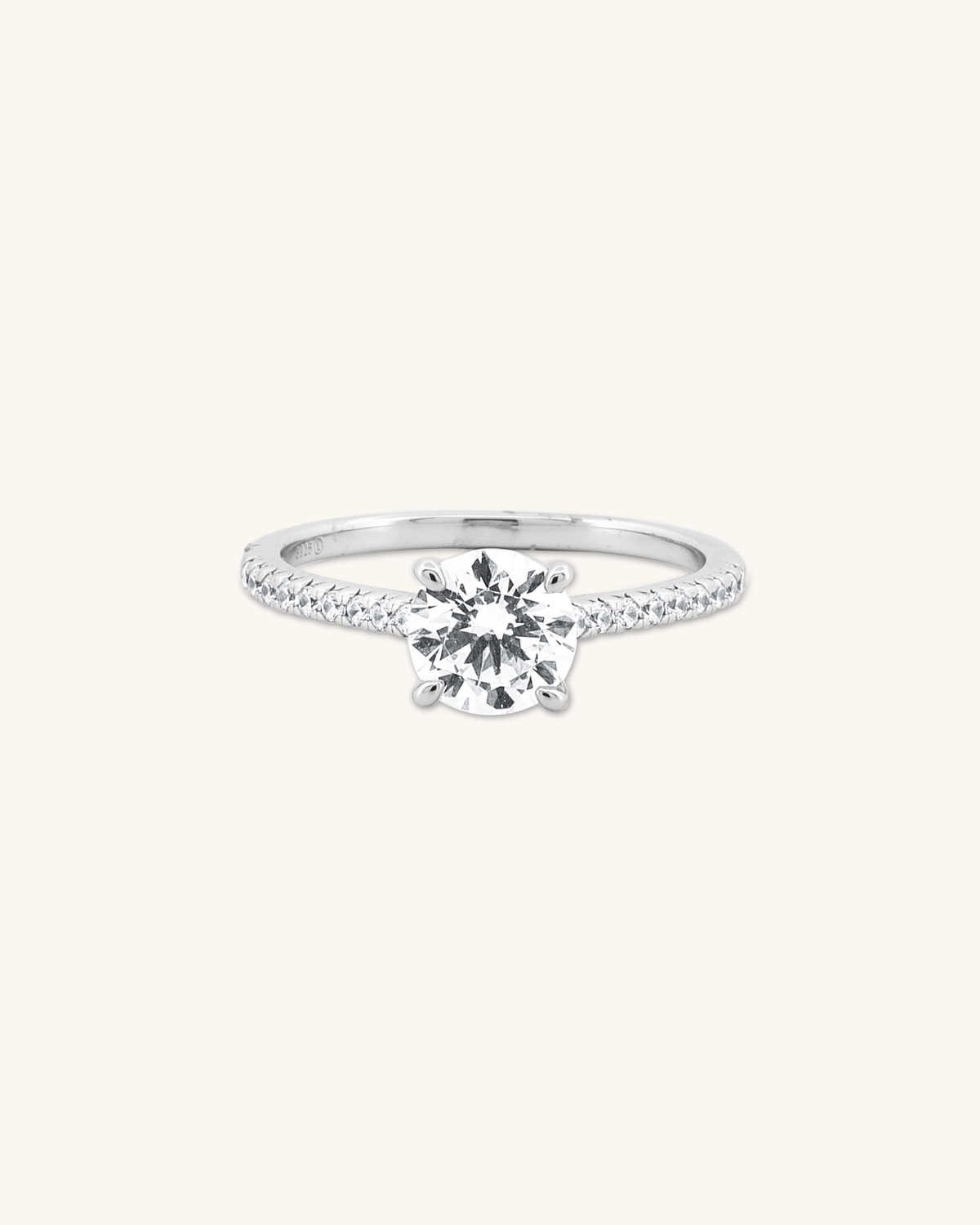
Moissanite vs. Diamond: Which Sparkle Is Right for You?
Choosing a ring—especially an engagement ring—often comes down to one big question: moissanite or diamond? Both are stunning, both sparkle, and to the naked eye they can look almost identical. But they're very different stones underneath, and the right choice depends on what you value most: maximum sparkle, traditional prestige, everyday durability or value for money.
This guide breaks down exactly how moissanite and diamonds compare—brilliance, hardness, color, price, ethics and how to tell them apart—so you can decide with total confidence.
What is moissanite?
Moissanite is a gemstone made of silicon carbide. It was first discovered in 1893 by French scientist Henri Moissan inside a meteor crater—which is why it's sometimes called "the stone from the stars." Natural moissanite is incredibly rare, so virtually all the moissanite used in jewelry today is created in a laboratory.
Because it's lab-grown, moissanite is sustainable, conflict-free and dramatically more affordable than a mined diamond of the same size—while still being one of the most brilliant and durable gemstones you can buy.
Moissanite vs. diamond at a glance
| Feature | Moissanite | Diamond |
|---|---|---|
| Hardness (Mohs) | 9.25 — excellent | 10 — hardest on earth |
| Brilliance / sparkle | Higher (RI 2.65) | High (RI 2.42) |
| Fire (rainbow flashes) | More than 2× a diamond | Subtle, classic |
| Origin | Lab-grown, conflict-free | Mined or lab-grown |
| Price (per carat) | Up to ~90% less | Premium |
Brilliance and fire: which one sparkles more?
If you want maximum sparkle, moissanite has the edge. It has a higher refractive index than a diamond (2.65 vs. 2.42), so it bends and returns more light. It also has more than double the "fire"—those flashes of rainbow color you see when the stone moves.
The result is a livelier, more dazzling sparkle. Some people adore that extra fire; others prefer the subtler, white "diamond" sparkle. Neither is wrong—it comes down to taste. In smaller sizes the difference is barely noticeable; in larger stones, moissanite's extra fire becomes more obvious.
Hardness and everyday durability
On the Mohs scale of hardness, a diamond is a perfect 10—the hardest natural material on earth. Moissanite is close behind at 9.25, which still makes it one of the most scratch-resistant gemstones available. For everyday rings, both are excellent and built to last a lifetime with normal care.
Color, clarity and value
Quality moissanite is near-colorless and eye-clean, meaning you won't see inclusions without magnification. Diamonds are individually graded for color and clarity, which is part of what drives their price. The biggest practical difference? Value. A moissanite center stone can cost up to 90% less than a comparable mined diamond—so you can choose a larger, brighter stone, or simply save for the things that matter.
How to tell moissanite from a diamond
Side by side, the easiest tell is the sparkle: moissanite throws noticeably more colorful "disco-ball" flashes. A jeweler can confirm it instantly, because moissanite is doubly refractive (light splits into two paths inside the stone) while a diamond is singly refractive.
Will moissanite pass a diamond tester? Often, yes. Basic testers measure how a stone conducts heat, and moissanite conducts heat similarly to diamond—so it can read as "diamond." That's why jewelers use a combined moissanite/diamond tester, which also measures electrical conductivity to tell them apart for certain.
Is moissanite right for your engagement ring?
Choose moissanite if you want:
- Maximum sparkle and fire
- A bigger look for your budget
- An ethical, lab-grown, conflict-free stone
- Excellent everyday durability
Choose a diamond if you want:
- The hardest possible stone
- Traditional prestige and resale recognition
- A subtler, classic white sparkle
How to care for moissanite jewelry
Moissanite is wonderfully low-maintenance. Clean it with warm water, mild soap and a soft brush to keep it sparkling, and store it separately to avoid scratches against other jewelry. Remove rings during heavy manual work—not because moissanite is fragile, but to protect the setting.
Shop moissanite at Nakablu
Ready to find your sparkle? Our moissanite pieces are set in 14K gold and gold vermeil, from everyday studs to show-stopping engagement rings. A few favorites:


Explore the full moissanite engagement ring collection and the moissanite earrings to find your perfect match.
Frequently asked questions
Is moissanite a real diamond?
No—moissanite is its own gemstone (silicon carbide), not a diamond. It's a popular diamond alternative that looks similar but is more affordable and even more brilliant.
Does moissanite get cloudy over time?
No. Moissanite doesn't degrade or get cloudy; it may simply collect everyday oils and lotions. A quick clean restores its full sparkle.
Is moissanite good for an engagement ring?
Yes. With a Mohs hardness of 9.25 and exceptional brilliance, moissanite is durable enough for daily wear and a beautiful, budget-friendly choice for engagement rings.
Can jewelers tell moissanite from a diamond?
Yes. A jeweler can identify moissanite quickly using a moissanite-specific tester or by spotting its double refraction under magnification.
How much cheaper is moissanite than a diamond?
Significantly—often up to 90% less per carat than a comparable mined diamond, which is why you can get a much larger look for the same budget.